


The House Always Wins? Not If You Understand RTP, Variance, and Edge
Every casino game on the planet is built on the same uncomfortable truth: the house has an edge. But here is what separates a player who loses slowly and o
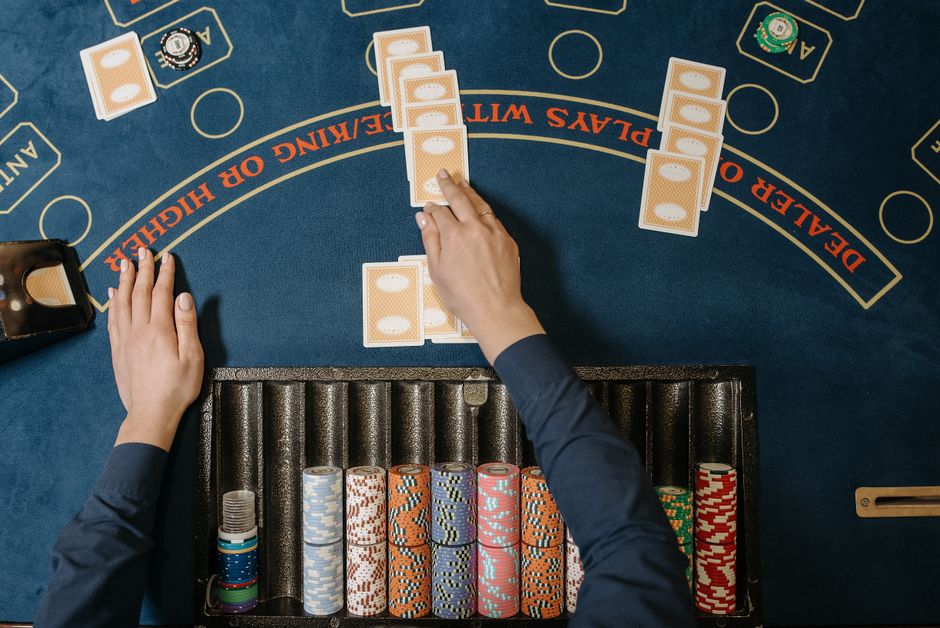
Every casino game on the planet is built on the same uncomfortable truth: the house has an edge. But here is what separates a player who loses slowly and one who loses fast—or occasionally walks away ahead—is understanding exactly how that edge works, where it hides, and how to pick games that give you the best fighting chance. Forget the myths about "hot" machines and lucky streaks. Let's talk about the numbers that actually matter.
House Edge Is Not a Suggestion—It's Math
The house edge is the average profit the casino expects to make from every bet you place, expressed as a percentage. It is not random. It is engineered into the rules, the paytables, and the odds of every possible outcome.
Take European roulette. A single-zero wheel has 37 pockets. If you bet $1 on red, your true odds of winning are 18/37, but the payout is only even money (1:1). That gap—the difference between true odds and payout odds—creates a house edge of 2.7%. On an American wheel with two zeros, that edge jumps to 5.26%. Same game, same felt, dramatically different cost to play. A player betting $100 per spin for three hours will lose, on average, $486 on the American wheel versus $243 on the European one. That is not luck. That is arithmetic.
Blackjack offers an even starker contrast. Basic strategy—a mathematically optimal set of decisions for every hand combination—can reduce the house edge to roughly 0.5% on a standard six-deck game where the dealer stands on soft 17. Play hunches instead of strategy, and you are handing the house 2% or more. Over a thousand hands at $10 per hand, that difference is $150 versus $500 in expected losses.
- European roulette: 2.7% house edge
- American roulette: 5.26% house edge
- Blackjack (basic strategy): ~0.5% house edge
- Baccarat (banker bet): 1.06% house edge
- Slots: 2% to 15%+ depending on the machine and jurisdiction
Slots: RTP, Variance, and Why "Hot" Machines Don't Exist
Slot machines are the most popular casino game in the world, and also the most misunderstood. Every regulated slot has a Return to Player (RTP) percentage—the theoretical amount returned to players over millions of spins. A 96% RTP means the machine keeps 4% on average. That 4% is the house edge.
But here is the catch: RTP is a long-run average. In any given session, you might hit a 500x bonus or lose 200 spins in a row. That volatility—called variance—is what makes slots exciting and dangerous. High-variance slots like Book of Dead or Bonanza pay rarely but can pay enormous amounts when they do. Low-variance slots like Starburst pay frequently but in smaller increments. You will find a helpful summary at สล็อต.
What about "hot" and "cold" machines? Pure myth. Modern slots use random number generators (RNGs) that produce independent outcomes on every spin. A machine that just paid a jackpot is no more or less likely to pay again than one that hasn't paid in hours. The only thing that changes is your bankroll.
If you want to stretch your playtime, choose slots with RTP above 96% and low variance. If you are chasing a big score, accept that high-variance slots will drain your balance faster between wins. Neither approach changes the house edge, but they change how long you stay in the game.
Poker Is the One Game Where Skill Beats the House
Poker is fundamentally different from every other casino game. You are not playing against the house—you are playing against other players. The casino takes a rake (a small percentage of each pot), but your long-term results depend on your decisions relative to your opponents' decisions.
A skilled poker player can achieve a positive expected value (EV) against weaker opponents. A bad player will lose to the rake and to better players. That is why poker is classified as a game of skill in many jurisdictions.
Three concepts separate winning players from losing ones:
- Position: Acting last gives you more information. Play more hands from the button, fewer from early position.
- Pot odds: If the pot is $100 and you need to call $10 to draw to a flush, you are getting 10:1. You only need to win more than 9% of the time to break even. Compare that to your actual odds of hitting the flush (roughly 19% on the turn), and the call is profitable.
- Bankroll management: Even the best players endure downswings. A winning player might go 20 buy-ins without a cash. If you play with money you cannot afford to lose, you will make emotional decisions that destroy your edge.
Online poker has made this even more transparent. Trackers and HUDs (heads-up displays) let you analyze every opponent's tendencies. If you are not using data to inform your decisions, you are at a disadvantage against players who are.
Betting Markets: Where Information Is the Real Currency
Sports betting is not about picking winners. It is about finding value—situations where the odds offered by the bookmaker are higher than the true probability of the outcome. That is why sharp bettors do not ask "Who will win?" They ask "Is the price right?"
Bookmakers build in a margin called the overround or vig. On a typical NFL game, you might see -110 on both sides of a spread. That means you must risk $110 to win $100. The implied probability on each side is 52.4%, summing to 104.8%. That extra 4.8% is the bookmaker's edge.Sharp bettors look for markets where the bookmaker has mispriced the odds—often in less popular leagues, player props, or live betting where lines move quickly. They also understand that closing line value (CLV) is the best predictor of long-term profitability. If you consistently beat the closing line, you are a winning bettor, even if you have a losing week.
- Line shopping: Different books offer different prices. Always take the best number.
- Specialization: You cannot know every sport. Focus on one league or market and become an expert.
- Record keeping: Track every bet—stake, odds, result, and reasoning. Without data, you are guessing.
The Bottom Line: Play Smarter, Not Harder
No strategy eliminates the house edge in casino games. That is not pessimism—it is reality. What you can control is which games you play, how much you bet, and how long you stay. Choose European roulette over American. Learn basic blackjack strategy. Pick slots with high RTP and variance that matches your bankroll. Treat poker and sports betting as skill games where edge is earned, not given.
The casino does not need you to lose every session. It only needs you to keep playing. Your job is to make sure that when you do play, you are getting the best possible odds, the most entertainment per dollar, and the discipline to walk away when the math turns against you. That is not luck. That is strategy.


Post a comment